Survival guides · Family & Communication
Signal for Rescue
ACT NOWYou're stranded and need to be found. Use every signal you have, at once.
-
Call first, if you can
- Any bars? Call or text 911.
- No signal? Dial 911 anyway — iPhone 14 and newer offer to text 911 by satellite. Get outside, clear view of the sky.
- Then save the battery — turn it off between tries.
-
By day
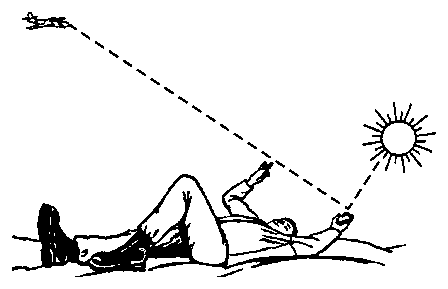
- Signal mirror — the flash can be seen for 10+ miles.
- Hold it by your eye. Stretch your other hand toward the plane or boat.
- Tilt until the light hits your hand, then the target.
- Sweep it slowly across the target — fast flashing can look like gunfire, and don't hold it on the cockpit more than a few seconds.
- No mirror? Anything shiny.
- Spread bright clothing or a mylar blanket on open ground.
-
By night
- Fire. Three in a triangle is the distress signal. One big fire on high ground works too.
- A flashlight or phone screen carries for miles — flash SOS: 3 short, 3 long, 3 short.
- Glow sticks, road flares.
-
Sound
- A whistle carries up to a mile and costs no energy.
- Three blasts, pause, repeat.
- Car horn, banging on metal.
- Save your voice for when rescuers are close.
-
For aircraft
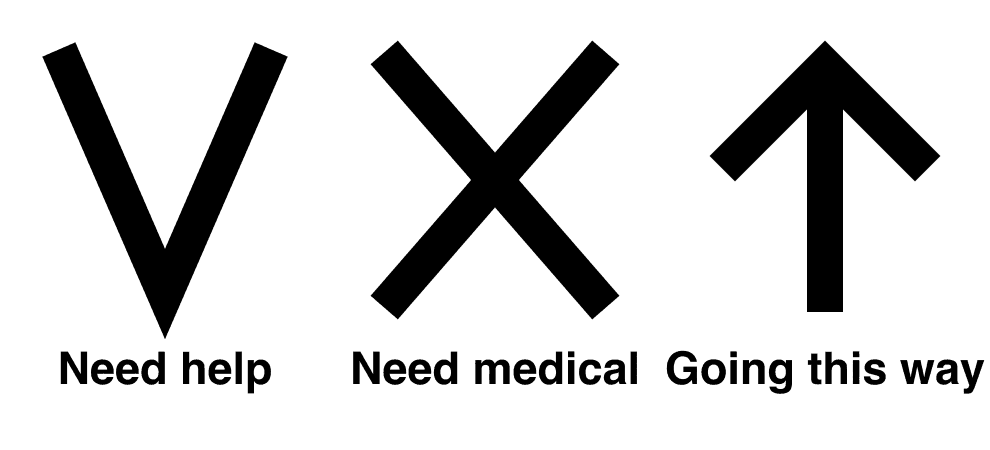
- Big: about 20 feet long, each arm 3 feet wide. Sharp contrast with the ground.
- Rocks, logs, clothing, or tramped into snow or sand.
- V = need help. X = need medical help. → = going this way.
- Stay by it. Wave both arms slowly when a plane comes.
Sources: US Army FM 3-05.70 Survival (ch. 19, Signaling Techniques) · US Coast Guard Visual Distress Signals
General information to help in an emergency — not a substitute for training or professional care.
← All survival guides