
During an Earthquake
ACT NOWThe ground is shaking. Stay where you are — don't run outside or to another room.
-
Drop
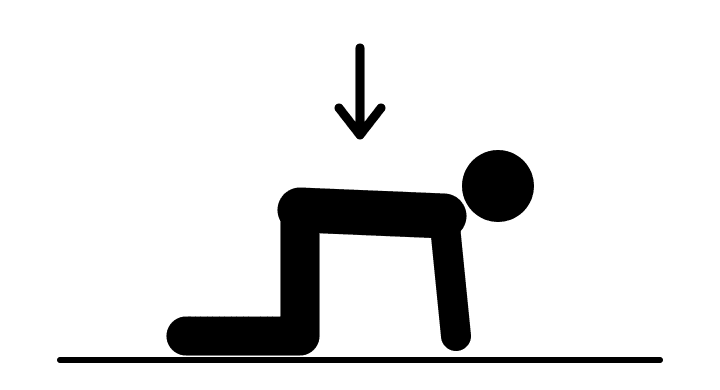
- Down on hands and knees, right where you are.
-
Cover
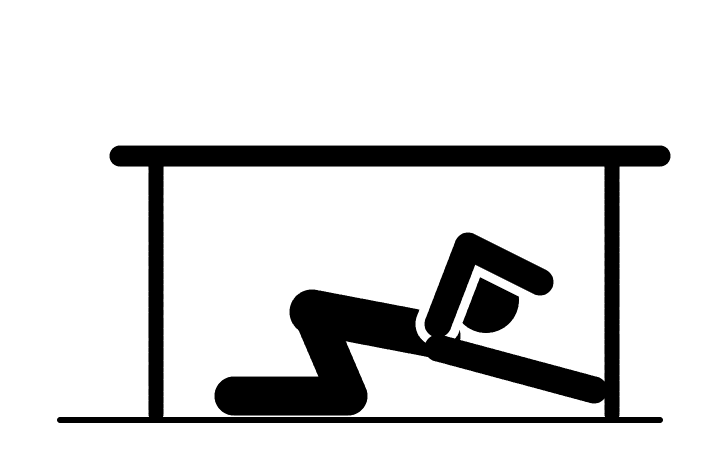
- Crawl under a sturdy table or desk.
- One arm over your head and neck.
- No table? An inside wall, away from windows, mirrors and anything heavy.
- Not a doorway.
-
Hold on
- Grip a table leg. If the table moves, move with it.
- Stay put until the shaking stops.
- In bed: turn face down, pillow over your head and neck.
- Driving: pull over, stop, set the parking brake.
- Outside: stay outside. Get clear of buildings, trees, streetlights and power lines, then drop and cover.
- Wheelchair or walker: lock the wheels, get as low as you can, cover your head and neck.
-
When the shaking stops
- Check yourself, then others.
- Damaged building? Get out — stairs, never the elevator — and keep clear of it.
- Smell gas or hear hissing? Shut off the gas if it's safe. (See Shut Off Home Utilities.)
- Aftershock? Drop, cover, hold on again.
- On the coast and the shaking was strong or long? Head for high ground now. (See Tsunami.)
Why
Most earthquake injuries happen to people who are moving — falling, or hit by things falling — not to people who stay down. Getting low first means the shaking can't knock you over, and you can still crawl to cover. The doorway advice comes from old adobe houses; in a modern home a doorway is no stronger than anywhere else, and the door can swing into you.
Sources: FEMA / Ready.gov · USGS Earthquake Hazards Program
General information to help in an emergency — not a substitute for training or professional care.
← All survival guides